
Industrial Policy Program
An industrialized Sudan is one with more decent jobs, higher productivity, advancing technological capabilities, and exporting goods with higher value-added. These are the benefits necessary for the prosperity of any modern human society, generally unattainable without industrialization. For such prosperity to take place and realize material benefits for the society, industry and industrialization must be guided and defined by people centered values, according to which trade-offs between industries and industrial options are to be made prioritizing life of current and future generations.Industrial policies can be defined as any type of intervention or public measure that attempts to improve the enabling environment for industries or to alter the structure of economic activity towards sectors, technologies or tasks that are expected to offer better prospects for industrial advancement than would occur in the absence of such interventions.This program, within ISTinaD, focuses on the study and development of industrial policies from a people-centered development perspective as key to transforming Sudan’s current reality.
Sudan’s industrial reality shows low levels of technology and diversification, along with high dependency on the basic metal extractive sub-sector, which was preceded by high dependency on crude oil exports and prior to that on export crops and livestock exports. An economic history of low value-added exports from the resource-rich country cannot be denied, and it can be illustrated by the case of a very small share of leather products (0.5% of the country total manufacturing exports) in a country with over 100 million heads of livestock.This reality is simultaneously a consequence and propagator of many of the country’s tragedies. Official interest in quick cash exports cannot be detangled from the environmental, humanitarian and health disasters experienced by inhabitants of mining and oil production areas as lack of strategic planning necessary to enable high value adding sectors is a direct reason for the country’s extremely low employment rate. Low employment (especially skilled work with higher purchasing power), on the other hand, is responsible for the lack of sufficient revenues necessary for the state to provide its citizens with a host of their basic rights.While Sudan’s industrial figures varied through the years, showing higher GDP during the oil export years of 2002 – 2012 for example, or larger numbers of state-owned industrial facilities in the 1960s and1970s, the percentage of Sudanese people benefiting from these realities remained consistently low. This is a result of industrial policies that marginalized the interests of the majority of the country’s population for the benefit of wealthy exporters, owners of large scale farms, and elite business owners.In ISTinaD we believe that people-centered industrial policies are crucial for development and peace. We advocate for rethinking and redesigning the country’s industrial reality in ways that prioritize the wellbeing of communities and individuals. Our research focuses on the policies necessary to put the country on the path towards genuine, people-centered, industrialization.
Industrial Policy Program library
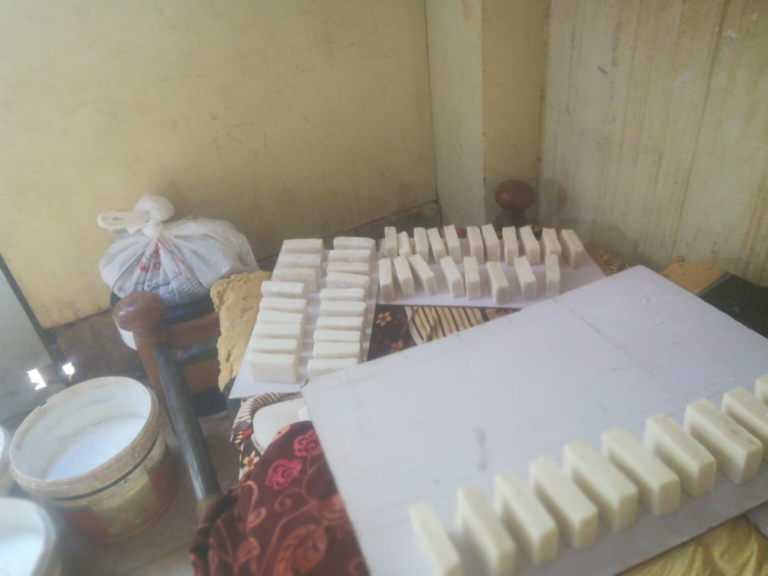
From Struggle to Strategy: Lessons from Micro and Small-Scale Manufacturers in Wartime Sudan
The Sudan War series is a joint collaboration between the Center for Economic, Legal, and Social Studies…
People-centered evaluation of industrial policies in post revolution Sudan 2019-2021
This paper explores the industrial policies and trajectories that the transitional government of Sudan (TGS)…

Industrial policies for latecomers in developing countries: a developmental state approach
In 1791, Alexander Hamilton, American Secretary of Treasury, submitted to Congress his report on industry…

The path toward an industrial policy that prioritizes people
Any serious efforts towards establishing an industrial policy for Sudan requires beginning by defining the…
 English
  العربية